Anodizing is one of the most popular surface finishes for aluminum machined and die-cast parts. It forms a hard, protective oxide layer on the aluminum surface through an electrochemical process. This layer greatly improves corrosion resistance, wear resistance and also delivers consistent decorative colors
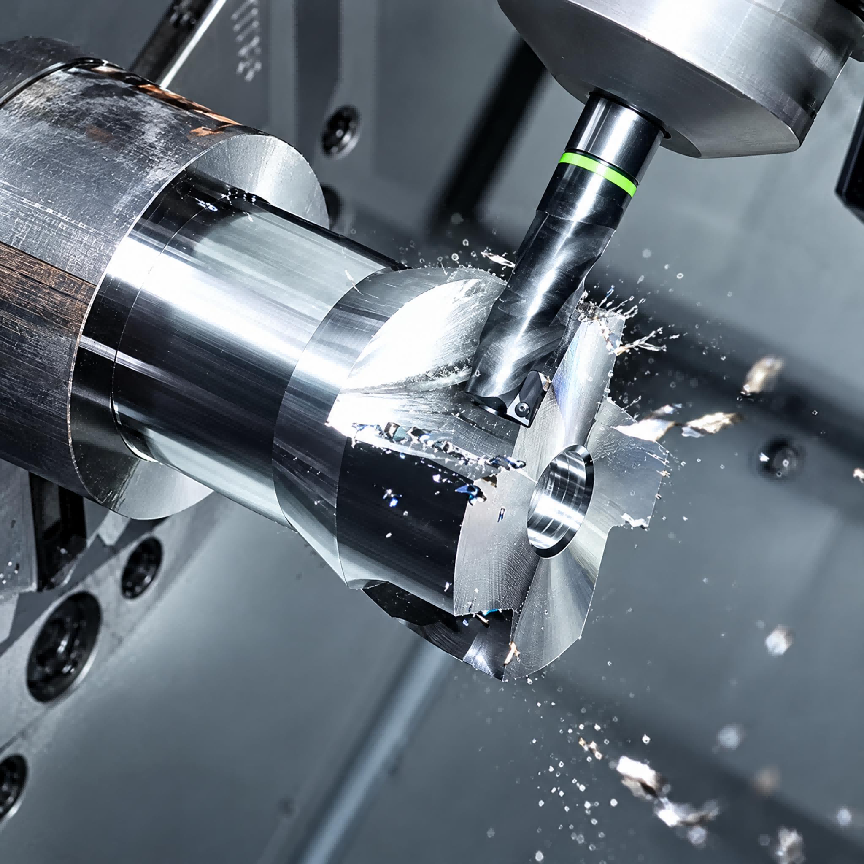
CNC turning is one of the most fundamental and widely used precision machining processes. Different from milling, which cuts material with rotating tools, turning fixes the cutting tool while the workpiece spins at high speed. This process is ideal for manufacturing round, cylindrical, and rotary symmetrical parts with high concentricity and smooth surface finish.
Not all custom CNC parts require 5-axis machining. It is a targeted solution for special designs that 3-axis or 3+2 machining cannot handle efficiently. Choosing 5-axis at the right time helps you avoid repeated clamping errors, reduce defects and get better part quality.